Olga Potapenko
MD in medical and social expertise and neurology, PhD
I focus on comprehensive medico-social rehabilitation of people with disabilities. I help make well-grounded decisions on disability status, needs and rehabilitation pathway, relying on clinical data, experience in medical and social expertise and modern digital tools.
social expertise
neurology
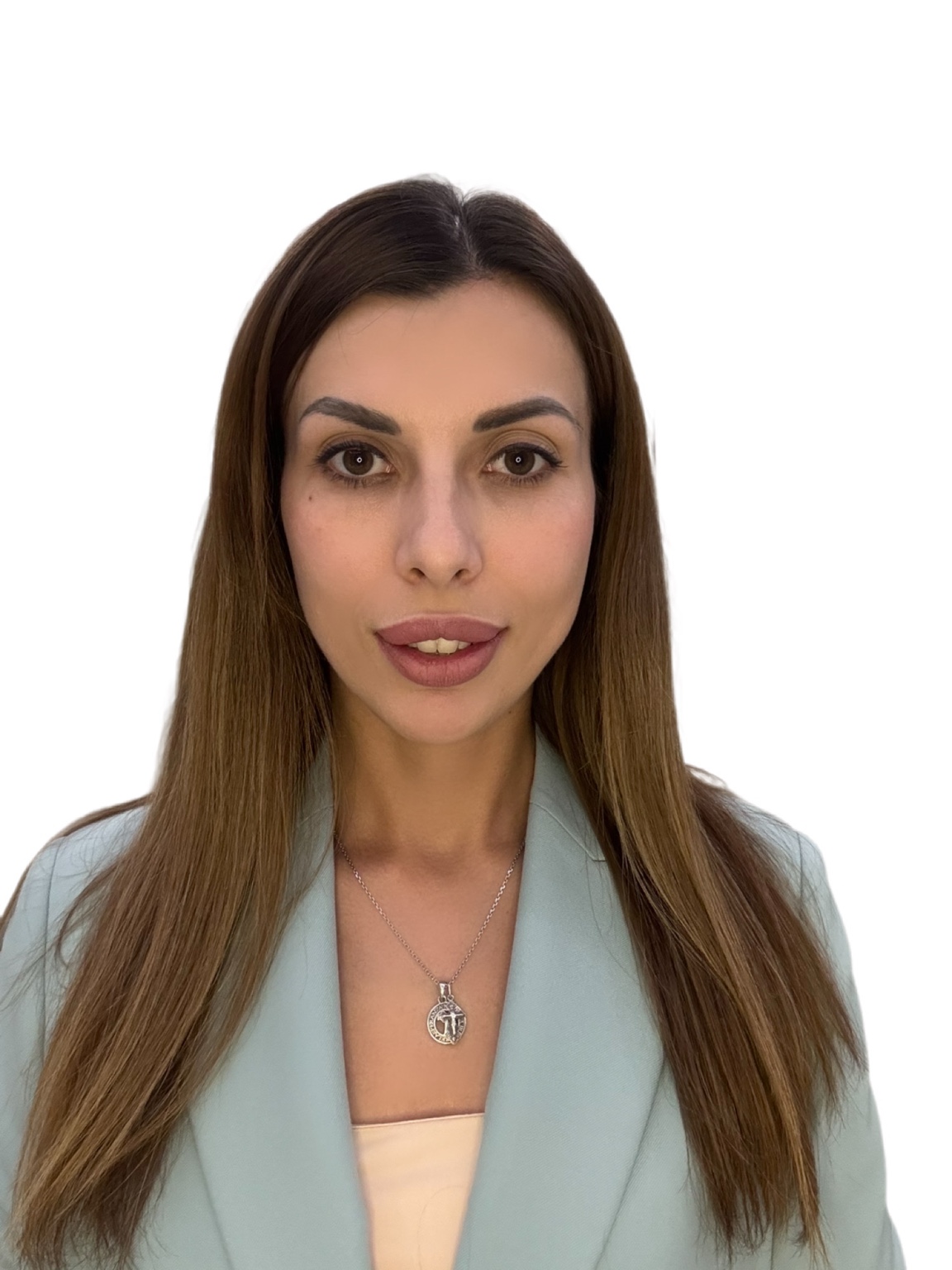
About
I am an MD in medical and social expertise and neurology, PhD in Medicine. I work with people with disabilities: from assessment of functional limitations to designing individual programmes of comprehensive medico‑social rehabilitation.
My approach combines clinical expertise, deep understanding of the medical and social expertise system, research analysis and the use of modern digital tools. This makes it possible to base decisions on data, evidence and consistent clinical reasoning rather than on isolated fragments of information.
An important part of my work is to see a specific person behind statistics and documents: their real abilities and limitations, as well as resources that can improve their quality of life and rehabilitation outcomes.
- medical and social expertise and understanding of expert decision‑making;
- neurology and clinical view on functional states;
- research work and data analysis on populations with disabilities;
- interest in modern digital medicine and AI‑based tools;
- focus on quality of life of people with disabilities and real effectiveness of rehabilitation decisions.
Digital medicine and analytics
In my work I use modern digital solutions, analytical systems, data processing tools and methods of artificial intelligence. For me they are primarily a practical resource rather than a tribute to fashion: technologies help make expert assessment deeper, faster and more accurate.
Digital tools speed up analysis of complex information, reveal patterns that are difficult to see manually and enable a more comprehensive view of a patient’s condition and the results of care.
In rehabilitation of people with disabilities this is especially important: accurate data help to better assess needs, plan the volume and pathway of assistance and monitor the effectiveness of rehabilitation measures.
- Speed. Analytical systems process large data sets much faster than traditional approaches.
- Accuracy. Standardised digital data reduce the risk of missing important details.
- Foresight. Technologies help to see trends before they become clinically or organisationally evident.
- Personalisation. Analysis takes into account the characteristics of a particular person, not only average indicators.
- Decision support. AI tools are an additional resource that strengthens the expert rather than replacing them.
Research activity
My PhD thesis focuses on disability due to malignant neoplasms of the brain and on improving comprehensive medico‑social rehabilitation of people with disabilities. The research is based on long‑term analysis of medical and social expertise data, clinical and sociological materials, which helps to better understand the needs of this group and ways to increase the effectiveness of rehabilitation.
In research I am interested in quality of life of people with disabilities, consequences of functional impairments, effectiveness of comprehensive support programmes and the way modern data analysis methods can improve approaches to organising rehabilitation and evaluating its outcomes.
Publications appear in Russian and international peer‑reviewed journals indexed in major citation databases (Scopus, Russian Science Citation Index and others).
Selected publications
An original paper on the structure and dynamics of the population of persons with disability due to malignant brain neoplasms in Moscow in 2016–2021. The results are used to plan measures aimed at improving comprehensive rehabilitation.
- Journal: Consilium Medicum, 2023, vol. 25, no. 6
- Authors: N.S. Zapariy, O.I. Potapenko, A.V. Vyalov
- Scope: disability population, structure of disability, rehabilitation
- DOI: 10.26442/20751753.2023.6.202343
A study of repeated disability among women with malignant brain neoplasms. The indicators are used to design measures for prevention and reduction of disability and to plan rehabilitation pathways.
- Journal: Journal of Modern Oncology, 2024, vol. 26, no. 1
- Authors: S.P. Zapariy, O.I. Potapenko
- Scope: repeated disability, women, rehabilitation programmes
- DOI: 10.26442/18151434.2024.1.202627
A sociological study of quality of life in people with disability due to malignant brain neoplasms. The findings help to refine priorities for comprehensive rehabilitation and to assess its effectiveness.
- Journal: Physical and Rehabilitation Medicine, 2024, vol. 6, no. 1
- Authors: O.I. Potapenko, N.S. Zapariy, D.D. Bolotov, S.V. Novoseltsev
- Scope: quality of life, rehabilitation, social integration of people with disabilities
- DOI: 10.26211/2658-4522-2024-6-1-96-102
Additional papers address needs of people with disabilities, effectiveness of individual rehabilitation programmes and organisation of medico‑social support. A full list of publications is available on request.
- Focus: disability, rehabilitation, organisation of care
- On request: extended list of publications and links to scientific electronic libraries
Key competencies and collaboration formats
- medical and social expertise;
- neurology and assessment of functional states;
- disability and limitations of life activity;
- rehabilitation and planning of care;
- assessment of quality of life;
- work with digital data and analytical systems;
- use of AI tools in expert practice;
- research and methodological activity.
- Public and expert bodies. Analytics, expert opinions, participation in methodological projects.
- Medical institutions. Consultations on complex cases, assessment of condition and rehabilitation potential.
- Academic and educational centres. Joint research, publications, lectures and seminars.
- Digital health and IT teams. Expertise in medical data, evaluation of AI use and practical applicability of solutions.
My professional values
Experience and professional philosophy
- analysis of long‑term data sets and identification of patterns;
- assessment of quality of life and functional impairments;
- participation in projects aimed at improving expert assessment and organisation of care;
- use of digital systems and analytical tools in daily practice;
- experience of working with people with different limitations of life activity;
- research and educational activity.
It is important to me that expert decisions are scientifically grounded, transparent and lead to real improvements in people’s lives.
I believe in a model where clinical thinking, data and modern technologies complement each other, while a person’s quality of life remains the key focus point.
For media and scientific events
Available for expert commentary for specialised media, participation in round tables, scientific and educational events on disability, rehabilitation, quality of life and digital medicine.
Upon request I can suggest topics for talks, comments and presentations, as well as a short expert dossier.
Contact and collaboration
Please briefly indicate the type of your organisation, the topic of the request and the expected format of collaboration (consultation, expert opinion, project, research, lecture, etc.).
Open to expert consultations, analytical and research projects, participation in advisory boards and discussion platforms related to modern medicine, disability, rehabilitation and digital tools.